When someone walks into my office with autism, ADHD, and anxiety tangled together, I do not start with a technique. I start by building a map. Where are the executive function bottlenecks? Which sensory inputs flood the system? What does panic look like in this body? Who is in the person’s world and how do they help or hinder regulation? That map stops us from chasing symptoms in isolation. It lets us design neurodivergent therapy plans that fit the person, not a manual.
The clinical picture is rarely tidy
Autism and ADHD often travel together. Depending on the study, 30 to 50 percent of autistic people meet criteria for ADHD, and anxiety disorders occur in roughly half. The overlap looks different across ages. A six year old may show sensory defensiveness, difficulty shifting from play to cleanup, and bedtime fears that escalate to meltdowns. A thirty five year old might describe social exhaustion, missed deadlines, and cyclic insomnia that starts with rumination and ends with avoidance. The nervous system story is consistent: chronic overarousal, difficulty filtering stimuli, working memory that drops details under pressure, and social expectations that feel like a second job.
Anxiety can be secondary to systemic friction. If every group meeting brings unpredictable interruptions, or every school hallway screams with fluorescent hum and chatter, vigilance feels logical. Social anxiety also often grows from lived experience. Repeated feedback about being “too much,” “too blunt,” or “disorganized” trains the brain to anticipate criticism. Traditional therapy sometimes frames this as distorted thinking. I prefer a broader lens: accurate pattern recognition operating in an environment that needs modification as much as the individual needs skills.
Assessment that respects the nervous system
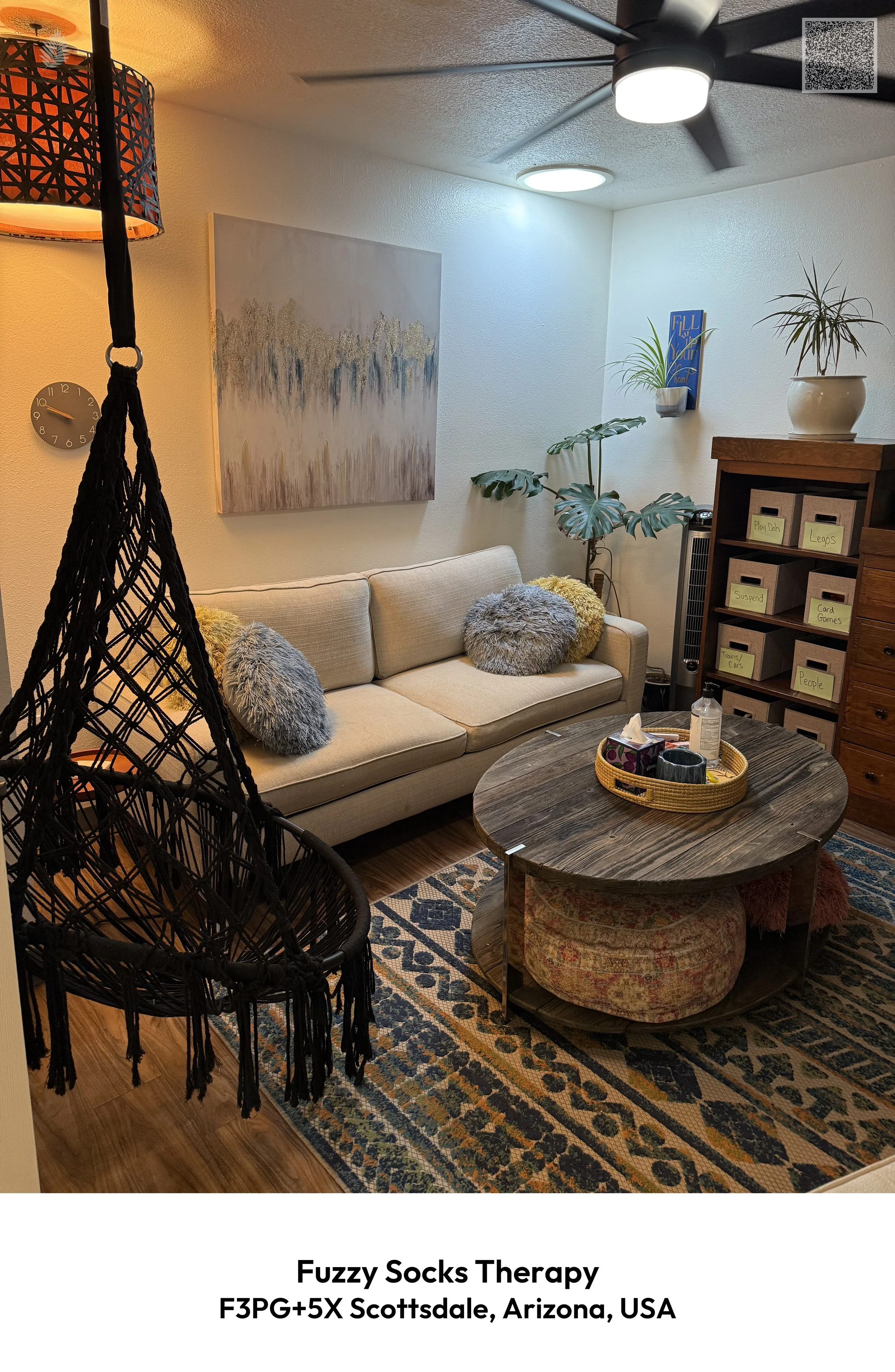
The first session sets the tone. Fluorescent lights off. A small fan or white noise if the hallway gets loud. Clear expectations about time and what will happen. I offer written and visual supports, not just verbal questions. Many clients think faster in writing or need extra seconds to organize responses. Parents and partners are welcome for part of the intake if the client agrees, since they can often describe patterns the client cannot see from the inside.
I look for several domains that shape an integrated plan:
- Triggers and buffers: sensory inputs, social contexts, and routines that raise or lower arousal. Executive function profile: initiation, working memory, time awareness, reward sensitivity. Anxiety cycles: what sets fear off, how it escalates, what safety behaviors show up. Trauma history: medical procedures, bullying, masking burnout, restraint or seclusion, family rupture. System supports: school accommodations, workplace flexibility, family roles, access to care.
That simple checklist, when completed with care, anchors the rest of treatment. It also prevents a common pitfall: mistaking shutdown for depression, or hyperverbal processing for mania. Autistic shutdown is often a protective energy conservation response, not a mood collapse. ADHD talking sprints can be problem solving, not hypomania. Context and function matter.
Goals that speak human, not diagnostic code
I ask for two kinds of goals. First, functional targets: get through morning routine without panic, submit work tasks on time three weeks in a row, order groceries without decision fatigue, make one friend at the new job. Second, experience goals: feel less dread at 8 pm, get out of sensory overload faster, trust myself in conflict. Functional goals give us measurable waypoints. Experience goals keep us honest about quality of life.
We agree on metrics that do not require a perfect memory. I might use a two minute daily check in on a phone widget, color coded rather than text heavy. Or a sticker chart for a child who loves visuals, with a clear bridge to natural rewards like extra time on a special interest. For adults, a shared spreadsheet can track sleep windows, stimulant timing, and anxiety spikes across the week. Patterns beat recollections.
The integrated plan, piece by piece
There is no single correct order, but I usually build across six domains that reinforce each other.
1. Stabilize the environment
Therapy that ignores environment asks the person to do all the work. A few targeted adjustments go a long way.
At home, we set up visual structure: a weekly whiteboard for timing demands, bins with picture labels for common clutter zones, and a “landing strip” by the door that receives keys, wallet, mail. For sensory regulation, I test two or three options rather than a dozen: loop earplugs, a weighted lap pad for work, a soft brim cap under bright lights. Choice overload makes change stall.
At school and work, I help clients script straightforward accommodation requests tied to tasks. Examples include one task at a time by email instead of multi thread chats, 24 hour notice for meetings when possible, outlines given with assignments, and seating in a low traffic area. Framing matters. “This improves my reliability and quality” lands better than “I have autism.” I often write letters that emphasize performance outcomes and reference legal frameworks only if needed.
2. Adjust therapy methods for neurotype
Cognitive behavioral strategies, exposure work, and EMDR therapy can be effective, but only when adapted.
For autistic clients, language works best when literal, specific, and organized. I avoid metaphors that require inference. With ADHD, I shorten the time horizon and add more immediate reinforcement. I rethink homework as tiny experiments rather than long worksheets: two minutes of breath pacing before opening email, then log the result as “worse, same, or better.” The goal is rapid learning, not moral striving.
Exposure therapy for anxiety needs careful pacing. Many autistic clients have high baseline arousal. Pushing into feared situations without adequate sensory support backfires. I sometimes start with imaginal rehearsal plus sensory preparation, then move to brief in vivo steps. A client terrified of grocery stores practiced aisle navigation at 7 am when it was quiet, first with sunglasses and headphones, then with just the sunglasses. We celebrated the first five minute trip like a marathon.
3. Address trauma directly and safely
Trauma therapy must account for the way memory is stored in neurodivergent systems. Masking, ongoing social microaggressions, and medical trauma leave deep marks. EMDR therapy can help process stuck memories and reduce the physiological charge around them, but the standard protocol usually needs modification.
I typically lengthen Phase 2, resourcing and preparation, and shorten individual reprocessing sets at first. I offer a choice of bilateral stimulation methods. Many clients prefer slow tactile pulsers or gentle tapping to eye movements or audio tones. I also use more visual anchors, such as a printed Subjective Units of Distress thermometer, so clients can point rather than narrate during overload. If dissociation or shutdown appears, we switch to grounding via sensory input, not just cognitive orientation.
A common trauma target for autistic adults is the experience of being mocked for stimming or being physically restrained in school. For one client, we worked on a memory of a teacher taking away a fidget and forcing eye contact. We built a “Protector Team” imagery that included a favorite game character and a cousin who always listened. With that team in place, reprocessing unfolded steadily over six sessions. The client did not become suddenly sociable. Instead, they stopped replaying the event each night. They chose when to make eye contact and felt agency in that choice.
4. Build executive function scaffolding
ADHD brings inconsistent access to attention and motivation. Telling someone to try harder does nothing. We build external scaffolds that respect how dopamine directs action.
Time blindness responds to visual timers and fixed anchors. I like using two alarms to start a task, separated by 90 seconds. The first alarm is a heads up, the second is the go. For transitions, countdowns often worsen pressure. A “when you are ready within the next five minutes” window works better. For task initiation, we use a five minute launch rule. Open the document, type a title, and write two sentences. If momentum grabs you, continue. If not, stop and schedule another five minute window later. Frequency beats duration in early stages.
Rewards should be immediate and genuinely interesting, not philosophical. A client who loves trains paired writing three emails with watching a four minute locomotive video. Another used a points system with points redeemable for takeout on Fridays. These are not bribes. They are neurochemistry supports.
5. Strengthen relationship systems
Couples therapy can be pivotal when autism, ADHD, and anxiety intersect with shared routines, intimacy, and conflict patterns. Many couples get stuck in demand-avoid cycles: one partner seeks planning and predictability, the other shuts down under perceived control. I teach both partners to track arousal and to label the mode they are in: engage, problem solve, or soothe. Only one mode at a time. If the ADHD partner is in soothe mode after a long day, the grocery plan waits. If the autistic partner is ready to engage with a concrete plan, we make that plan short, written, and specific.
I also translate communication styles. A partner who uses direct, concise statements may sound harsh to a partner who expects social padding. We develop scripts that keep the directness but add context. “I need twenty minutes quiet, then I can help with dinner.” For sensory intimacy, I help partners map textures, temperatures, and pressures that feel safe and those that do not. Anxiety drops when predictability rises.
Family work with children and teens follows similar logic. We shift from compliance to collaboration. In child therapy for neurodivergent kids, play becomes both intervention and assessment. A ten year old who lines up toy cars is not being oppositional. They are regulating. If we join the pattern, we earn the right to shape it gently over time. Meanwhile, we coach parents on three levers that move behavior: reduce unnecessary demands, support regulation first, and give choices within boundaries.
6. Coordinate with prescribers without tunnel vision
Medication can lower the noise floor so therapy sticks. Stimulants often help attention and mood in ADHD, but can raise anxiety in a subset of clients. SSRIs can ease rumination, though some autistic folks report increased restlessness on certain agents. I do not recommend specific drugs; I help clients track response. A simple shared log captures sleep quality, appetite, focus windows, and anxiety spikes by hour. After two to four weeks per change, we have data, not guesswork.
The trade off is real. A stimulant that boosts task initiation may also increase late afternoon irritability. We then adjust timing, add a protein snack at 3 pm, or consider a different formulation. If a medication blunts special interests, we reconsider. Joy matters.
Working with the body, not against it
Therapy goes faster when we align with the nervous system’s native tools. Many clients already use movement to regulate. We formalize it. Before hard tasks, five minutes of heavy work, like wall push ups or carrying a weighted backpack around the apartment. During sessions, I keep fidgets available and encourage gaze aversion if it helps focus. We do not stop rocking, we use rocking to pace access to stress.
Breath work needs tailoring. Slow exhale practices, like 4 seconds in and 6 out, calm many people, but some autistic clients feel trapped focusing on breath. We then try humming, which lengthens the exhale without monitoring. Cold water on the face or a brief splash can trigger the dive reflex and reduce heart rate. Experimentation is part of the plan.
Sleep stabilizes mood and executive function. I aim for a stable sleep window within 60 to 90 minutes consistency across nights, even on weekends. For ADHD, a later anchor often works better than chasing early bedtimes that never stick. Blue light filters help a bit, but the bigger wins come from shutting down dopamine rich scrolling thirty minutes before bed and using an audio book or low stimulation hobby instead. If worry pops up in that half hour, we park it in a visible notebook with a slot on the calendar to revisit. The brain settles when it believes there is a plan.
Adapting EMDR: a brief, concrete guide
Therapists sometimes ask how to apply EMDR therapy with clients who have autism or ADHD and high anxiety. Here is a compact workflow that has worked in my practice:
- Expand preparation with sensory resource building. Identify two to three reliable regulators, such as weighted input, rhythmic movement, or a specific tactile object, and rehearse them until automatic. Choose bilateral stimulation that stays in the client’s window. Tactile pulsers on a slower cadence often beat rapid eye movements for comfort and grounding. Externalize scales and cues. Use printed SUD and VOC scales, signal cards for “too fast” or “pause,” and a visual map of the phases on the table. Shorten sets and increase interweave frequency. Keep reprocessing bursts brief, check orientation often, and use concrete interweaves tied to the client’s lived supports. Close with sensory downshifts, not only cognitive closure. Two minutes of movement or heavy work, a cold sip of water, and a visual schedule for the next hour reduce post session whiplash.
This is not a replacement for formal training. It is an example of how trauma therapy adapts when the nervous system prefers predictability, clarity, and body based anchors.
School and workplace: where therapy meets life
A therapy hour cannot counteract forty hours a week of misfit environments. I encourage clients to apply the plan where it matters most.
In school settings, I collaborate with teams to embed supports into Individualized Education Programs or 504 plans. Useful items include reduced homework load focused on mastery rather than repetition, permission for movement and noise reducing headphones, and explicit teaching of transition routines. For a teenager with both autism and ADHD, we trained teachers to use one instruction at a time and to allow a two minute delay before expecting a response. That small window avoided public pressure and meltdown. Anxiety fell, and task completion rose.
In workplaces, I help clients assess job fit. A role that demands constant multi tasking and client facing spontaneity may drain an autistic ADHD brain to the point of illness. Shifting to deep work tasks or hybrid schedules can transform health. When change is not possible, we negotiate boundaries. One client moved daily check ins from video to chat and asked for meeting agendas the day prior. The change took two emails and cut panic attacks by half.
Case vignette: weaving the pieces
A 28 year old software tester came for help with panic at work, missed deadlines, and a relationship that felt brittle. History included undiagnosed autism until age 24, ADHD diagnosed at 26, and years of school bullying. Sleep ran from 1 am to 7 am with frequent doom scrolling. Stimulants helped in the morning but led to a 4 pm crash. The partner described evenings spent arguing about chores.
We started with environmental stabilization. At home, we created a whiteboard for weekly tasks with a three column flow: to start, in progress, done. Each task card had a written micro step. The partner agreed to move from verbal reminders to pointing at the board once, then walking away. At work, the client requested written task breakdowns and one meeting per day cap when possible.
We built executive scaffolds: two alarm starts for deep work blocks, a five minute launch rule, and an immediate reward after each block. https://donovanujda476.iamarrows.com/autistic-burnout-vs-depression-clarifying-in-neurodivergent-therapy We paired this with anxiety tracking using a simple emoji scale logged three times a day. Data showed anxiety spiked after multi thread chat sessions. The client negotiated a chat pause during deep work.
For trauma therapy, we identified two targets: a high school episode of public humiliation and a medical procedure where consent felt absent. We spent three sessions on EMDR preparation, including identifying a fidget cube and a soft hoodie as sensory anchors, choosing slow tactile bilateral stimulation, and practicing pause signals. Reprocessing proceeded in short sets. Across eight sessions over two months, SUD on both targets dropped from 8 to 2. Nightly rumination decreased.
Couples therapy sessions focused on arousal modes and scripts. The client practiced “I need twenty minutes quiet, then I can join for dishes.” The partner practiced offering two task choices and using the board, not voice, for reminders. They also mapped sensory intimacy preferences and planned dates around quieter venues.
Medication coordination led to a small stimulant dose reduction and a midday booster timed with protein intake. Irritability at 4 pm faded. Sleep shifted to 12 am to 7:30 am with a 30 minute pre bed wind down using a low stimulation audio book. After twelve weeks, panic attacks fell from daily to weekly, task completion stabilized, and the relationship reported fewer fights and more shared routines.
Child therapy that honors development
With children, especially under ten, the plan leans into play and parent coaching. Anxiety often shows as refusal or aggression. Underneath sits a nervous system that cannot downshift. I design sensory circuits at home and school. A five year old might do animal walks between stations, blowing bubbles to lengthen exhale, then a brief quiet tent time before circle. We embed choices everywhere: choose the red marker or blue, wash hands now or after one more car, sit on the chair or the wobble cushion. Choice builds agency, which lowers anxiety.
Narrative work takes the form of social stories written with the child’s language. For example, “When the fire alarm rings, my ears hurt. I can put on my headphones. I can hold my teacher’s hand. We go outside. The sound stops. My body can rest.” Parents learn to praise regulation behaviors as much as task completion. If a child asks for a break before a meltdown, that is a win.
Trauma therapy with children who are neurodivergent often means working with parents first. We reduce triggers in the environment, teach co regulation skills, and coordinate with schools to stop punitive responses to stimming or shutdowns. If EMDR is used, it is brief and embedded in play, with bilateral stimulation delivered through tapping games or handheld buzzers the child finds interesting. Safety and predictability outrank speed.
Measuring outcomes without squeezing the person
Progress is rarely a straight line. I use a blend of subjective and objective measures. Anxiety ratings, sleep windows, and task completion rates provide numbers. Client narratives provide meaning. Did the person attend a friend’s gathering and enjoy it for thirty minutes before leaving? That is progress even if they left early. Did the child ask for noise canceling headphones without prompting? That is regulation growing.
I also watch for masking. Improved surface compliance with rising exhaustion is a red flag. Therapy should increase authentic choice, not produce a better actor. If the client reports more shutdowns at home while looking calmer in public, we pause and reexamine accommodations, pacing, and the pressure we might be adding.
Trade offs, edges, and clinical judgment
Not everything works for everyone. Weighted blankets help some and annoy others. Stimulants sometimes smooth focus and sometimes amplify irritability. Exposure might work well for noise triggers but fail when social unpredictability is the driver. I have watched beautifully designed routines collapse under the weight of a new baby or a job change. The point of an integrated plan is not perfection, it is resilience. When one pillar shifts, the others can carry more weight for a while.
There is also a line between therapy and advocacy. Many clients need both. Teaching a client to tolerate harmful conditions substitutes personal suffering for structural change. Where possible, I help clients and families find communities, coaches, and legal guidance. A well placed letter or a union conversation can do more than ten sessions of skills training.
Where to start if you feel overwhelmed
If you are reading this as a clinician, pick one domain to strengthen this week. Create a neurodivergent friendly intake flow and lighting in your office. Learn one sensory regulation technique you can teach in five minutes. If you are reading as a person or parent, try one small environmental change and one small routine change. Lower the bar until it is both doable and repeatable.
Finally, remember what the map is for. Autism, ADHD, and anxiety interact in complex ways, but they are not a moral failing or a life sentence of struggle. With tailored neurodivergent therapy, trauma therapy that honors the body, and thoughtful coordination across home, school, work, and relationships, people build lives that fit. I have watched it happen many times. The early steps often look humble: a whiteboard, a pair of headphones, a two sentence journal. Over time, those steps add up to capacity. Capacity opens choice. Choice opens the door to the things that make a life feel like your own.
Address: 3295 N. Drinkwater Blvd., Suite 10, Scottsdale, AZ 85251
Phone: (720) 378-8454
Website: https://www.fuzzysockstherapy.com/
Email: [email protected]
Hours:
Monday: 9:00 AM - 5:00 PM
Tuesday: 9:00 AM - 5:00 PM
Wednesday: 9:00 AM - 5:00 PM
Thursday: 9:00 AM - 5:00 PM
Friday: 9:00 AM - 5:00 PM
Saturday: Closed
Sunday: Closed
Open-location code (plus code): F3PG+5X Scottsdale, Arizona, USA
Map/listing URL: https://maps.app.goo.gl/cqhwvXU4UMg6QL1YA
Embed iframe:
The practice offers in-person therapy in Scottsdale along with online sessions for clients in Arizona, Colorado, and Florida.
Clients can explore services such as trauma therapy, EMDR therapy, Deep Brain Reorienting Therapy, neurodivergent therapy, child therapy, couples therapy, discernment counseling, and parenting intensives.
Fuzzy Socks Therapy is especially relevant for people navigating trauma, dysfunctional family dynamics, ADHD, autism, relationship conflict, and emotional overwhelm.
The website presents a direct, practical therapy style focused on real tools and meaningful change rather than vague advice.
Scottsdale clients looking for trauma-informed psychotherapy can find support that combines deeper healing work with concrete skill building.
The practice also offers help for adult children of dysfunctional families, couples on the brink, and neurodivergent kids, teens, and adults.
To get started, call (720) 378-8454 or visit https://www.fuzzysockstherapy.com/ to book a free consultation.
A public Google Maps listing is also available for Scottsdale location reference alongside the official website.
Popular Questions About Fuzzy Socks Therapy
What does Fuzzy Socks Therapy help with?
Fuzzy Socks Therapy helps with trauma, dysfunctional family patterns, neurodivergence, relationship conflict, emotional overwhelm, and related challenges for individuals, couples, and families.
Is Fuzzy Socks Therapy located in Scottsdale, AZ?
Yes. The official website lists the office at 3295 N. Drinkwater Blvd., Suite 10, Scottsdale, AZ 85251.
Does Fuzzy Socks Therapy offer in-person and online sessions?
Yes. The official site says the practice offers in-person therapy in Scottsdale and online therapy in Arizona, Colorado, and Florida.
What therapy approaches are listed on the website?
The website highlights EMDR therapy, Deep Brain Reorienting Therapy, discernment counseling, play therapy, Dialectical Behavior Therapy, Emotionally Focused Therapy, and practical trauma-informed skill building.
Who provides therapy at Fuzzy Socks Therapy?
The official website identifies the therapist as Lianna Purjes.
Does the practice offer couples counseling?
Yes. The website includes couples therapy, couples intensives, and discernment counseling for couples deciding whether to stay together or separate.
Does the practice work with children and adolescents?
Yes. The site says the practice offers child therapy and support for children, adolescents, and their families.
How can I contact Fuzzy Socks Therapy?
Phone: (720) 378-8454
Email: [email protected]
Website: https://www.fuzzysockstherapy.com/
Landmarks Near Scottsdale, AZ
Drinkwater Boulevard is the clearest local reference point for this office and helps nearby clients place the practice in Scottsdale. Visit https://www.fuzzysockstherapy.com/ for service details.
Old Town Scottsdale is a familiar city landmark and a practical reference for people searching for therapy near central Scottsdale. Call (720) 378-8454 to learn more.
Scottsdale Civic Center is another recognizable local landmark that helps define the surrounding area for nearby professional services. The official website has current contact details.
Scottsdale Stadium is a well-known destination in the city and a useful point of reference for local users. Fuzzy Socks Therapy offers both in-person and online sessions.
Indian School Road is a major corridor that helps many residents orient themselves in Scottsdale. More information is available at https://www.fuzzysockstherapy.com/.
Fashion Square and the surrounding central Scottsdale area are widely recognized by local residents and visitors alike. Reach out through the website to book a free consultation.
Downtown Scottsdale is a strong local search reference for people seeking counseling and psychotherapy services in the area. The practice serves Scottsdale in person and multiple states online.
Scottsdale Road is another major route that helps define the broader service area for clients traveling from nearby neighborhoods. The practice supports individuals, couples, and families.
The Scottsdale arts and civic district is a useful area reference for those familiar with the city center. Visit the site to review specialties and next steps.
Central Scottsdale commuter corridors make this practice relevant for nearby residents who want in-person therapy, while online sessions add flexibility for clients in Arizona, Colorado, and Florida.